
Knitted Bluebell Flowers – Free Pattern & Spring DIY Tutorial
Bring springtime beauty indoors with our free guide for knitted bluebell flowers! Simple, charming, and perfect for handmade bouquets. Click through to start crafting today!
Knitted Bluebell Flowers – Free Pattern & Spring DIY Tutorial
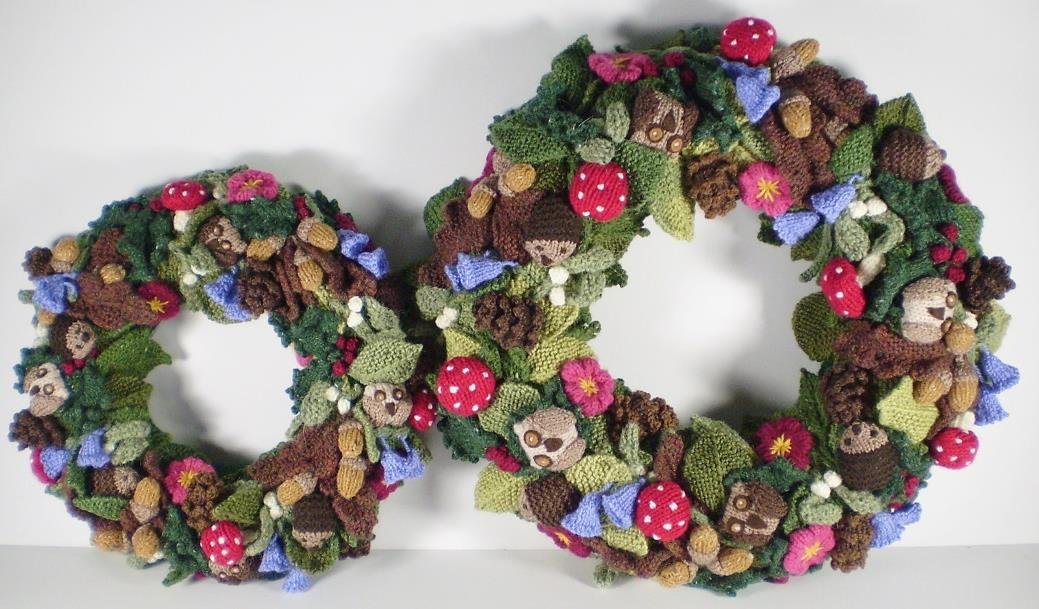
Bluebells are one of the most magical sights in a woodland in spring — a sea of nodding blue flowers stretching as far as the eye can see. These delicate knitted bluebell flowers are the finishing touch for a beautiful Woodland Wreath, adding that soft, dreamy quality you’d find in a real bluebell wood.
This free pattern by Frankie Brown gives you two sizes of bluebell flower, each on its own I-cord stem. Add six stems to your wreath — three big, three small — and your woodland wreath is complete. The pattern is simple and quick to knit, making it perfect for beginners and experienced knitters alike.
Table of Contents
What You’ll Need
For the Flowers
- Stylecraft Special DK (295m / 50g) in Bluebell — or any blue DK yarn you love
- 3.25mm / US size 3 needles
For the Stems
- Sirdar Snuggly DK (165m / 50g, shade 0442) — or any green DK yarn
- 3.75mm double pointed needles (DPNs) — you need at least 2
For the Wreath
- Tapestry needle for sewing in ends and attaching flowers
- Curtain rings for hanging — 20mm for a big wreath, 15mm for a small one
- Pins to position the bluebells before sewing down
Abbreviations
- K — knit
- P — purl
- m1 — make 1: lift the thread between stitches and knit into the back of it
- Kf&b — knit into the front and back of the stitch (increases by 1)
- st / sts — stitch / stitches
- I-cord — knit every row but don’t turn; slide stitches to the other end of the needle and pull yarn round from behind
How Many Bluebells Do You Need?

For each wreath, make 6 stems in total — 3 big and 3 small. Each stem has 2 bluebell flowers attached to it (one near the top and one a little lower down).
- Big bluebell flower: 3cm / 1″ long, on a 10cm / 4″ stem
- Small bluebell flower: 2cm / ¾” long, on an 8cm / 3″ stem
So in total you’ll knit 12 bluebell flowers (6 big + 6 small) and 6 stems (3 long + 3 short).
Knitting the Big Bluebell Flower

Using the long tail cast-on method, cast on 6 stitches.
- Row 1: Purl all stitches.
- Row 2: K1, (m1, K2) twice, m1, K1 — 9 sts

Beginning with a purl row, work 5 rows in stocking stitch (purl one row, knit one row, repeat).
- Next row: (Kf&b) 9 times — 18 sts
Cast off knitwise, leaving a long tail.
To finish:
- Darn in the cast-on tail.
- Using the cast-off tail, join the side seam of the flower.
- Gather the cast-on edge to form the closed tip of the flower.
- Leave the remaining tail — you’ll use it to sew the flower onto the stem.
Knitting the Small Bluebell Flower
Using the long tail cast-on method, cast on 4 stitches.
- Row 1: Purl all stitches.
- Row 2: K1, (m1, K1) 3 times — 7 sts
Beginning with a purl row, work 3 rows in stocking stitch.
- Next row: (Kf&b) 7 times — 14 sts
Cast off knitwise and finish in the same way as the big bluebell (join seam, gather cast-on edge, leave tail for sewing to stem).
Knitting the Stems (I-Cord)

The stems are worked as I-cord using double pointed needles.
How to knit I-cord: Cast on your stitches. Knit every row but don’t turn at the end of the row — instead, slide the stitches back to the right end of the needle and pull the yarn round from behind before knitting the next row. This creates a neat little tube.
Using the long tail cast-on, cast on 3 stitches.
- For big bluebell stems: work 30 rows of I-cord (approx. 10cm / 4″)
- For small bluebell stems: work 20 rows of I-cord (approx. 8cm / 3″)
Cast off using the double decrease cast-off: slip 1 stitch knitwise, K2tog, pass the slipped stitch over. Darn in both ends neatly.
Attaching the Flowers to the Stems
- Sew the first bluebell to the top of the stem using a small vertical stitch. Leave a tiny gap of yarn between the flower and stem so the flower hangs naturally — this is what gives it that real bluebell drooping look!
- Sew the second bluebell 1–2cm below the first, also with a small vertical stitch and a tiny gap.
💡 The little gap of yarn between flower and stem is the secret to making these look realistic — don’t skip it!
Adding the Bluebells to the Wreath

- Pin all 6 stems onto the wreath, arranging them to look natural — cluster them together slightly, as real bluebells grow in groups.
- Once you’re happy with the placement, sew each stem down along its length with your tapestry needle and yarn.
- Step back and adjust any flowers so they hang at slightly different angles for a natural, organic look.
Finishing the Wreath
The very last step — sew a small curtain ring to the back of the wreath for hanging.
- Use a 20mm ring for a big wreath
- Use a 15mm ring for a small wreath
Important: Attach the ring quite low down on the back of the wreath. When the wreath is hung, the knitting pulls upward slightly — so a lower ring keeps everything balanced and centred.
Tips for Beautiful Bluebells
- Use a true blue yarn — Stylecraft Special DK in Bluebell is perfect, but any bright cornflower blue DK will work.
- Keep your tension consistent when knitting the flowers — the stocking stitch body should be neat and even.
- When gathering the cast-on edge, pull firmly to close the tip of the bell completely.
- Mix big and small flowers on each stem — it looks much more natural than two flowers the same size.
- Real bluebells always droop and nod — don’t sew the flowers too stiffly. That little gap of yarn between flower and stem makes all the difference.
- Arrange stems in an informal cluster rather than spacing them evenly — natural groupings always look better.
Frequently Asked Questions
What yarn is best for the flowers?
Frankie used Stylecraft Special DK in Bluebell — it’s widely available, affordable, and the colour is spot-on. Any DK weight yarn in a clear blue works well.
Do I need double pointed needles?
Yes, for the I-cord stems you need at least two double pointed needles (DPNs) in 3.75mm. If you’ve never knitted I-cord before, it’s very easy — just follow the tip in the Stems section above.
How long does each stem take to knit?
Each I-cord stem takes only 10–15 minutes once you get into the rhythm. The flowers themselves are equally quick — the whole set of 6 stems and 12 flowers can easily be done in an evening.
Can I use a different colour?
Absolutely! White or pale pink would give you snowdrops or cherry blossom. Pale yellow could work for primroses. The pattern is versatile — just change the colour and the wreath tells a different seasonal story.
Conclusion
Crafting your own delicate floral blooms is a wonderfully rewarding and peaceful project that brings a touch of everlasting springtime into your home. Whether you arrange them in a vase or use them to decorate a handmade gift, these charming knitted bluebells add a lovely artisanal touch to any space. Grab your needles and yarn to bring this delightful botanical project to life. Click through to explore more wonderful crochet dress ideas and inspiring patterns to keep your handmade journey going!
One Comment