
Mini Capybara Amigurumi – Free Crochet Pattern for Plush Palm-Sized Toy
Meet the Mini Capybara — an adorable, palm-sized amigurumi plush toy that captures the chill, friendly vibe of the world’s largest rodent. This crochet pattern creates a 7 cm (2.75 inch) capybara (excluding ears) using super-soft plush yarn and simple shaping techniques. Perfect for keychains, desk buddies, or adding to your amigurumi collection!
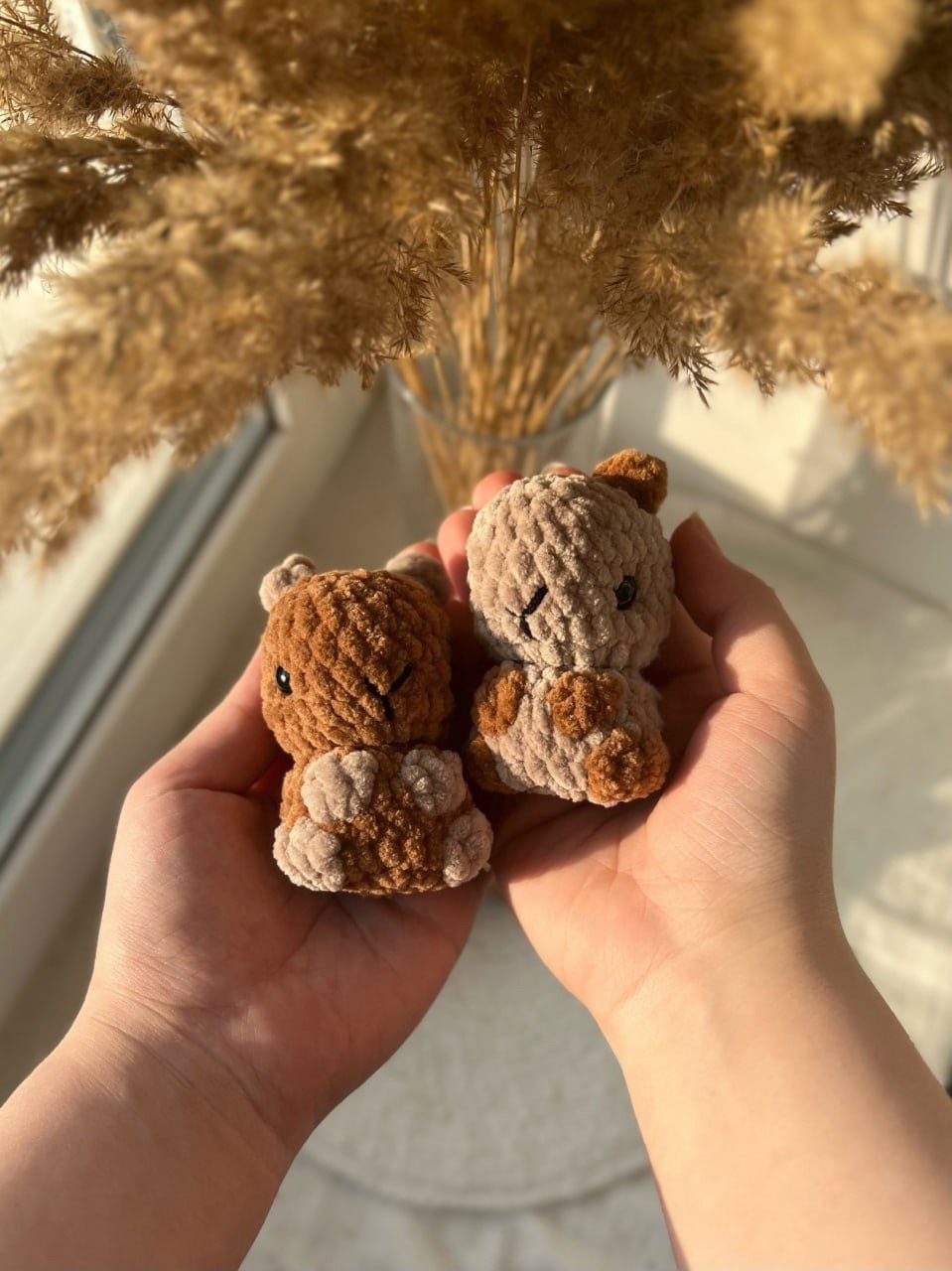
This pattern is adapted from the free “Baby Animals” masterclass by Все вязаное (All Knitted/Crocheted), with modifications by Alinushka_Vyazhet to create the distinctive capybara shape. Instructions are in Russian but use standard international crochet symbols that are easy to follow.
Table of Contents
At a Glance
| Finished Size | 7 cm (2.75 inches) long, excluding ears |
| Skill Level | Beginner-friendly (uses only sc, inc, dec, hdc, sl st) |
| Yarn | Himalaya Dolphin Baby or similar plush chenille yarn |
| Hook | 3.0 mm (or size to suit your yarn) |
| Eyes | 8 mm black plastic safety eyes |
| Time to Make | Approximately 1-2 hours |
| Uses | Keychain, desk buddy, amigurumi collection, gift |
Materials
- Yarn: Himalaya Dolphin Baby (or equivalent plush chenille) in two shades:
- Main color: Himalaya Dolphin Baby #80337 (brown)
- Accent color: Himalaya Dolphin Baby #80317 (light brown/beige)
- Hook: 3.00 mm crochet hook (or size that gives you tight, tight stitches with no gaps)
- Eyes: Two 8 mm black plastic safety eyes
- Stuffing: Polyester fiberfill (poly-fil)
- Additional: Yarn needle, scissors, stitch marker (optional)
Pattern Overview
The mini capybara is worked in one piece from bottom to top. You’ll start with a magic ring, build the body, shape the distinctive capybara head, add ears, insert eyes, and finish with a neat closure. The pattern uses increases and decreases to create the barrel-shaped body and the blunt, rounded muzzle that capybaras are known for.
Key shaping notes: The pattern creates the capybara’s signature blocky snout through specific increase/decrease placement on rows 9 and 14 (highlighted with red ! marks in the instructions). The ears are worked directly onto the finished head at the end.
Step 1: Body & Base
- Row 1: Magic ring, 6 sc — [6]
- Row 2: Inc in each st around — [12]
- Row 3: (sc, inc) × 6 — [18]
- Row 4: (sc 2, inc) × 6 — [24]
- Row 5: (sc 3, inc) × 6 — [30]
- Row 6: (sc 4, inc) × 6 — [36]
- Row 7: (sc 5, inc) × 6 — [42]
- Row 8: (sc 6, inc) × 6 — [48]
(You now have a round tube — this will become the capybara’s barrel-shaped body.)
Step 2: Head Shaping
- Row 9: (sc 7, inc) × 6 — [54] (! Special increase placement begins)
- Row 10: sc 54 — [54]
- Row 11: (sc 8, inc) × 6 — [60]
- Row 12: sc 60 — [60]
- Row 13: (sc 9, inc) × 6 — [66]
- Row 14: sc 66 — [66] (! Special decrease placement for muzzle shaping)
- Row 15: (sc 10, dec) × 6 — [60]
- Row 16: (sc 11, dec) × 6 — [54]
(The head is now taking shape — notice how the stitch count stays high to create that blunt, rounded capybara muzzle.)
Step 3: Close the Body
- Row 17: (sc 12, dec) × 6 — [48]
- Row 18: (sc 13, dec) × 6 — [42]
- Row 19: (sc 14, dec) × 6 — [36]
- Row 20: (sc 15, dec) × 6 — [30] Start stuffing firmly here
- Row 21: (sc 16, dec) × 6 — [24]
- Row 22: (sc 17, dec) × 6 — [18] Continue stuffing as you close
the capybara firmly but not rock-hard — you want it squeezable and plush. Keep adding fiberfill as the opening gets smaller.
Step 4: Final Closure & Eyes
- Row 23: (sc 5, dec) × 3 — [15]
- Row 24: (sc 4, dec) × 3 — [12] Insert 8mm safety eyes now between rows 23-24, about 6 stitches apart
- Row 25: (sc 3, dec) × 3 — [9]
- Row 26: (sc 2, dec) × 3 — [6]
- Row 27: (sc 1, dec) × 3 — [3]
- Row 28: dec 3 times — [0] Fasten off, weave in end
Place the safety eyes when you have about 12 stitches remaining — insert them into the head where indicated, about 6 stitches apart, then continue closing.
Step 5: Ears (Make 2)
- Magic ring, 4 sc — [4]
- Inc in each st around — [8]
- (sc, inc) × 4 — [12]
- sc 12 — [12]
- (sc 2, dec) × 3 — [9]
- sc 9 — [9]
- (sc, dec) × 3 — [6]
- sc 6 — [6]
- Fasten off, leaving a long tail for sewing.
Sew the ears onto the top of the head, symmetrical on each side, slightly behind where the eyes are placed
Your Mini Capybara is Ready!
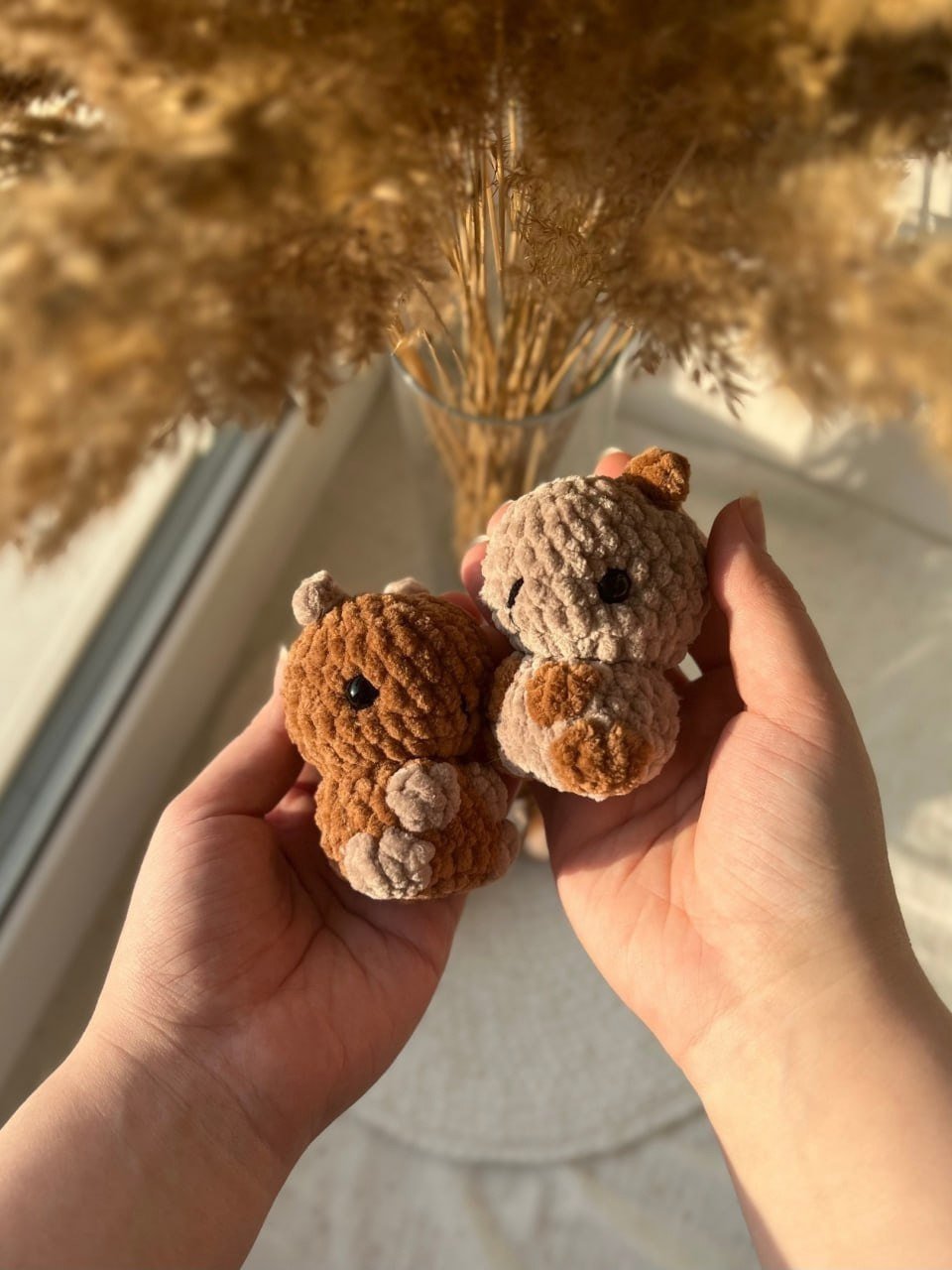
Once you’ve sewed on the ears and woven in all ends, your Mini Capybara is complete! These palm-sized plushies make perfect desk companions, keychain buddies, or cute gifts for animal lovers.
Share your makes and tag @magicinkitchen — we’d love to see your mini capybara crew!
Frequently Asked Questions
Do I need to speak Russian to follow this pattern?
No! The pattern uses standard international crochet symbols (Сбн=sc, Пр=inc, Уб=dec, etc.) that are the same across languages. The visual instructions and stitch counts are all you need to follow.
What yarn substitutes work?
Any super bulky or plush chenille yarn will work. Look for yarns labeled “blanket yarn” or “plush” — Bernat Blanket, Big Twist Loopity, or similar craft store brands. The key is a soft, fuzzy texture that hides the stitches slightly for that cute plush look.
Can I make it bigger or smaller?
Yes! To make a larger capybara, use a thicker yarn and larger hook (try 4-5mm with bulky yarn). For a smaller version, use fingering weight yarn and a 2mm hook. Adjust eye size proportionally.
Are these safe for children?
These use plastic safety eyes, which are not recommended for children under 3 years old. For child-safe versions, consider embroidering the eyes with black yarn instead of using plastic safety eyes
Conclusion
Ultimately, this Mini Capybara Amigurumi is the ultimate quick-make project that packs an undeniable dose of charm into a tiny package. With its signature blunt snout, tiny ears, and endearing posture, it captures all the relaxed, lovable spirit of the world’s largest rodent in a pocket-sized buddy. Whether you’re making a whole troop of them as gifts, using up scrap yarn, or simply looking for your next irresistibly cute crochet fix, this little capybara is guaranteed to bring a smile to your face.
One Comment